
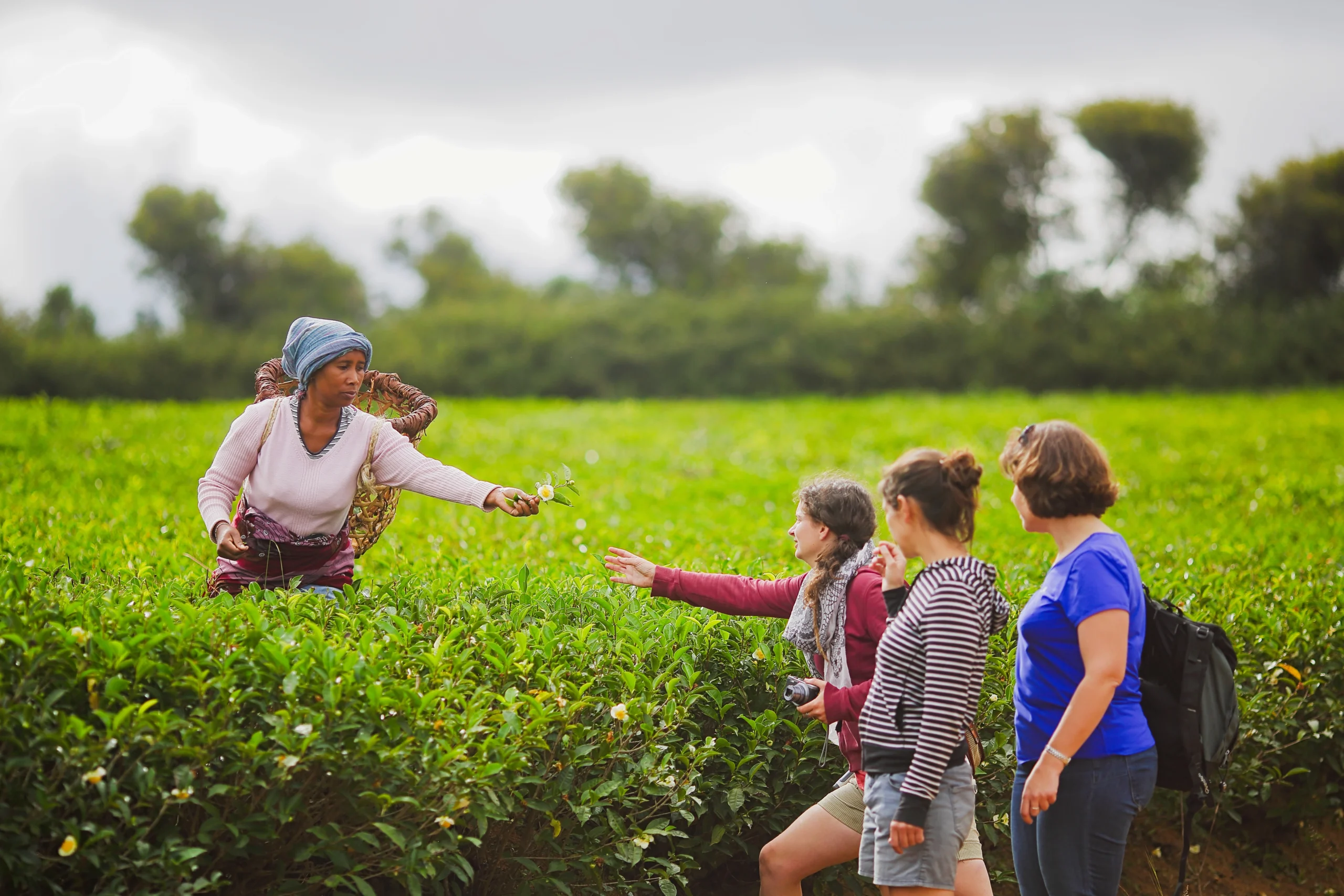
Could we really practice responsible tourism in Madagascar, or is it simply another marketing formula designed to reassure travellers? The question is worth asking. Around the world, tourism carries a paradoxical promise: discovering preserved places while sometimes contributing to their degradation. Madagascar is no exception to this reality. Every year, the island attracts visitors eager to admire its lemurs, tropical forests, wild beaches and ancestral cultures. But behind the picture-postcard scenery lies a more complex question: who exactly benefits from the journey?
Tourism can create jobs, finance nature conservation and support local communities. It can also generate waste, increase pressure on certain ecosystems and leave only a small share of the revenue in the territories visited.
So, is it possible to travel responsibly in Madagascar? Yes, but certainly not thanks to a simple label or advertising promise. Yet behind these promises, reality is often more complex. It involves a multitude of choices that are occasionally invisible to the traveller.
In this article, we are not going to give you a moral lesson. Instead, we will show you concrete situations, local initiatives and decisions that, taken together, can genuinely make a difference.
What mass tourism really does to Madagascar
Madagascar is home to 5 % of the world’s biodiversity on 1 % of the Earth’s land surface, and 90 % of its fauna and flora are endemic and threatened. Deforestation (fires, subsistence farming and illegal exploitation) destroys 100,000 hectares per year. Uncontrolled tourism intensifies these pressures: overcrowding at tourist sites, plastic waste and disruption of wildlife.
The challenge of local economic benefits
Within the tourism ecosystem, the revenue generated by a trip is distributed among many different stakeholders, who are also our best ambassadors: airlines, booking platforms, accommodation providers, guides, restaurants and artisans. It is a long chain, and often an international one. The real challenge is not to pit local stakeholders against international partners: both are necessary for travel to exist; but rather to ensure that local stakeholders genuinely benefit from it.
In Madagascar, as in many destinations, the share that goes directly to communities surrounding natural parks generally remains modest. This is not inevitable: this is precisely where the choices made by a tour operator can make a difference.
It is not inevitable
In reality, the problem is not travel itself, but how we travel. Ultimately, everything depends on our choices: whether or not to buy locally, for example. But alternative models do exist, driven by local stakeholders.
« According to the UNWTO, every dollar spent with a local operator generates up to 3 × more economic impact than a dollar spent with an international operator.»
What “responsible” really means — beyond the slogans
“Responsible tourism” is not a concept invented by just anyone. Its roots can be traced back to the Rio Earth Summit in 1992, where the international community began to formalise the idea that an economic activity could and should take its social and environmental impacts into account. Sustainable tourism followed, gradually codified by the World Tourism Organization through the lens of sustainable development: meeting the needs of the present without compromising the ability of future generations to meet their own needs.
Today, the word “responsible” can refer equally to a tour operator that donates 2% of its profits to an NGO, or to an operator that employs 100% local guides, selects accommodation according to ethical criteria and voluntarily limits the size of its groups. Both use the same word. The gap between these two practices is considerable.
What it does not mean:
Travelling uncomfortably. Responsible does not mean rustic.
- Giving up iconic sites. It is a question of how, not where.
- Paying more for the same thing with a clear conscience. The price should reflect a different economic reality, not a label.
What it really means:
Every travel decision — guide, accommodation, dining, shopping — is an economic transaction. Depending on the choices made, that transaction can then enrich local communities or bypass them. It can protect a habitat or weaken it. It can provide an authentic encounter with a culture or turn it into a staged experience for photographs.
Key takeaway: “Responsible” is not a posture. It is a set of operational, verifiable choices that have tangible consequences for real people and fragile ecosystems. The rest of this article gives you the tools to tell the difference.
Three pillars, not a logo
Obtaining a certification does not fully guarantee that an operator provides sustainable travel in Madagascar. Responsible tourism is based on three simultaneous commitments:
- Environmental: minimise the footprint (waste, carbon emissions, habitat disturbance)
- Economic: maximise local benefits (guides, accommodation providers, artisans, producers)
- Cultural: respect fady (Malagasy taboos) and avoid reducing a culture to consumable folklore
What this means in practical terms for a traveller
By choosing responsible travel in Madagascar, various eco-friendly actions can become part of a traveller’s everyday experience:
- Choose a certified local guide rather than an expatriate guide
- Stay in community-run guesthouses rather than chain hotels whenever possible.
- Do not touch lemurs, even if the guide suggests it (animal stress and disease transmission)
- Buy handicrafts directly from artisans, not from airport resellers.
- Respect local fady; they vary according to regions and ethnic groups.
How Aventour Madagascar works without giving itself a medal
It is easy to create a “our commitments” page with green icons and a list of good intentions. This is an exercise we deliberately chose to avoid. What follows is not a list of certifications, but a description of concrete operational choices, the reasons behind them, and the limitations we have not yet resolved. Because a tour operator that claims to do everything perfectly does not deserve your trust.
Our guides are Malagasy, trained and well paid
100% of our guides are local. Not because regulations require it, but because a guide who knows the species by heart, speaks their native language and has a personal connection with the places they travel through offers a fundamentally different experience. We pay above the market rate: a well-paid guide is a convinced ambassador, not a service provider simply carrying out a task. We invest in their ongoing training in wildlife, flora, responsible observation protocols and group management.
Our accommodation is carefully selected
Every accommodation option included in our itineraries has been selected according to precise criteria: local ownership, employment of community residents, responsible waste management and short supply chains. We have turned down highly rated establishments on international platforms because their practices did not meet our standards. We work with carefully selected hotels, and this is a deliberate choice.
Our itineraries respect carrying capacity
Some sites such as the Avenue of the Baobabs, the Tsingy de Bemaraha and the beaches of Nosy Be during the high season struggle to cope with current levels of tourist activity. We deliberately choose off-peak visiting times, lesser-known but equally remarkable alternatives, and limit the size of our groups to a maximum of 8–10 people. This is not about creating a sense of exclusivity; it is about ensuring that the site is still there twenty years from now.
Moreover, our off-the-beaten-track itineraries follow current responsible tourism trends, including JOMO holidays — the Joy of Missing Out and completely disconnecting.
What we do not yet do perfectly
Long-haul flights remain our largest source of carbon emissions, and we cannot eliminate them. We offer carbon offsetting with every booking, but we do not make it mandatory: it is the traveller’s choice, and we respect that freedom. We continue to review some of our practices regarding nocturnal wildlife observation, where standards are evolving and where we are not yet satisfied with all of our responses.
This transparency is intentional. A tour operator that claims to have no impact does not deserve your trust.
So, truly “Responsible”?
The question deserves an honest answer, not an end-of-article slogan or a promise that the perfect trip exists. Just what it really means for you before you book.
Yes, travelling responsibly in Madagascar is possible. But only if we accept that it requires choices, sometimes sacrifices, and always awareness. It is not an attitude we adopt by ticking a box; it is a series of concrete decisions made before departure and throughout the journey.
No, no journey is neutral. The flight exists, and so does its footprint. But the difference between a trip that impoverishes the communities it passes through and one that contributes to them is real, measurable and deeply human. It lies in choices you can make, if you know where to look.
The responsible traveller is not someone who sets off with a permanent sense of guilt. It is someone who asks the right questions before booking and demands concrete answers rather than relying on formal certifications.
If you want to travel to Madagascar knowing where your money goes, who is guiding your journey and why each stop has been chosen, Aventour Madagascar has concrete answers.

Let’s build a meaningful journey together
Tell us about your wishes, constraints and questions. Contact us now. We will propose an itinerary carefully designed down to the smallest detail, from guides to accommodation, from selected sites to lesser-known alternatives. Not a catalogue. A conversation.