
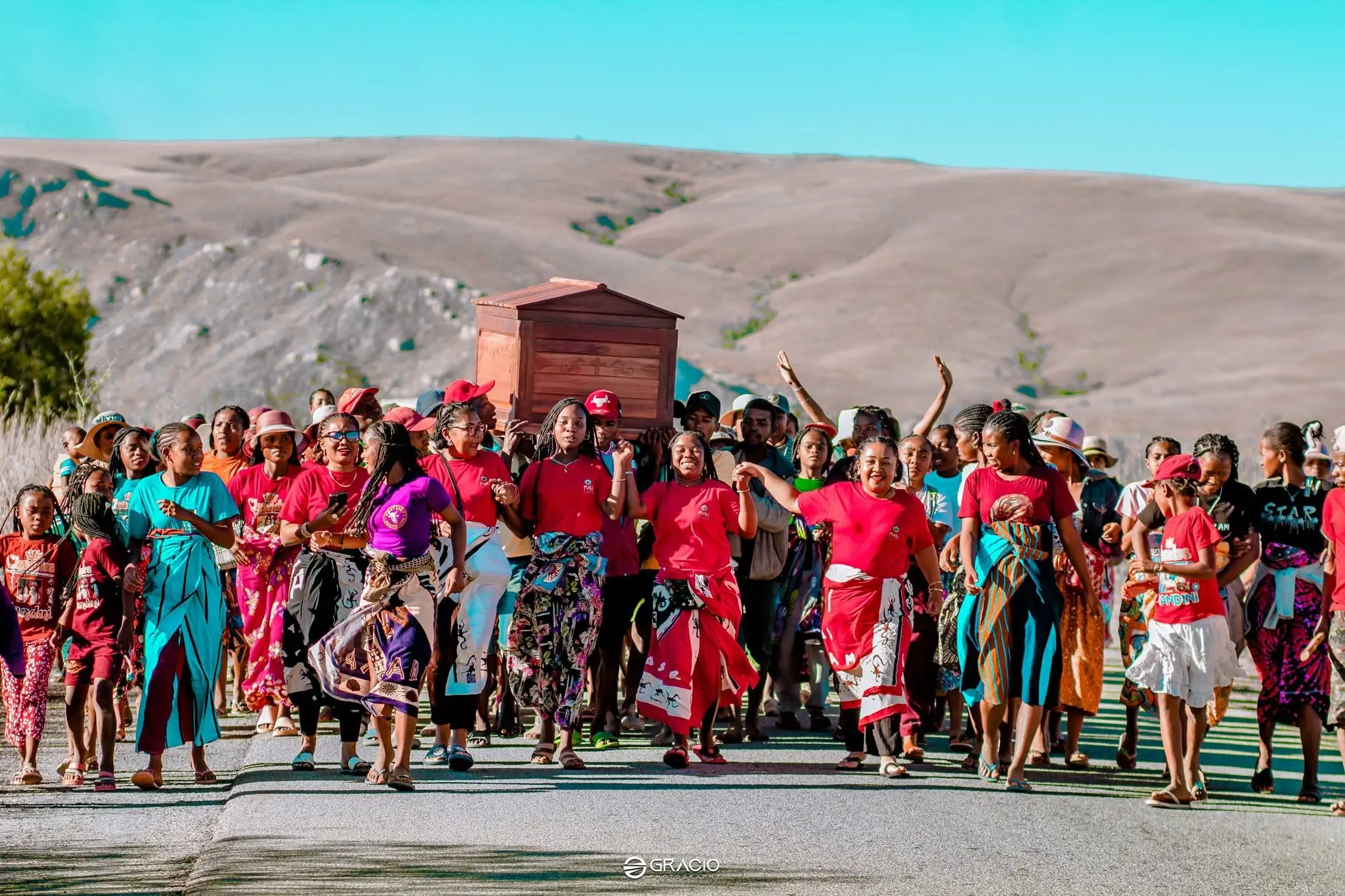
Famadihana in Madagascar, also known as the turning of the dead, is a tradition that truly reflects what it means to be Malagasy. Although the name may seem shocking to visitors from Western countries, what it represents is completely different. Famadihana is actually a joyful celebration commemorating family members. This celebration is deeply rooted in the culture of Madagascar’s Highlands.
In this article, you will discover what Famadihana really is and where this tradition comes from, why this ritual is a celebration of life rather than a macabre occasion, where and when it is practised in Madagascar, and how to attend it as a traveller while respecting families and traditions.
Table of Contents
- 1. What is “Famadihana”?
- 2. A tradition rooted in a specific history
- 3. What these rituals mean to the Malagasy people
- 4. Can travellers attend a Famadihana?
- 5. Why is the Famadihana ritual in Madagascar worth discovering?
1. What is “Famadihana”?
Famadihana (/famadiˈhana/) is a funerary tradition among the Malagasy people in which families exhume the remains of their ancestors from family tombs, wrap them in new shrouds and write their names again on the cloth to preserve their memory. The deceased are then carried above people’s heads in a festive atmosphere filled with music before being returned to the family tomb.
The word itself carries a double meaning: turning, but also transformation — a central idea in the way Malagasy people view death, not as an end, but as a transition.
2. A tradition rooted in a specific history
The ritual dates back to the late 18th century, during the unification of Madagascar’s kingdoms by King Andrianampoinimerina. King Andrianampoinimerina encouraged his people to build family tombs and bring back the remains of many soldiers who had died far from their homeland. King Andrianampoinimerina wanted every deceased person to be able to rest among their own people. This practice originated in Imerina and later spread to other ethnic groups within the unified kingdom of Madagascar under King Andrianampoinimerina.
Famadihana is practised mainly in the Highlands of Madagascar, generally between July and November during the dry season, and is organised every 3 to 7 years depending on family traditions. The exact date is often determined by a mpanandro, a traditional astrologer consulted by the organising family.
3. What these rituals mean to the Malagasy people
Unlike the way people in Western countries tend to think about death, Malagasy people view it differently during Famadihana. This celebration shows that generations remain connected. Malagasy people have a very strong relationship with their ancestors, whom they call the Razana. These ancestors are regarded as spirits who remain present in the lives of their families and communities.
It is not an isolated ritual: similar forms exist among other ethnic groups, with variations depending on the region and local beliefs. Each family and each village experiences this tradition in its own way.
4. Can travellers attend a Famadihana?
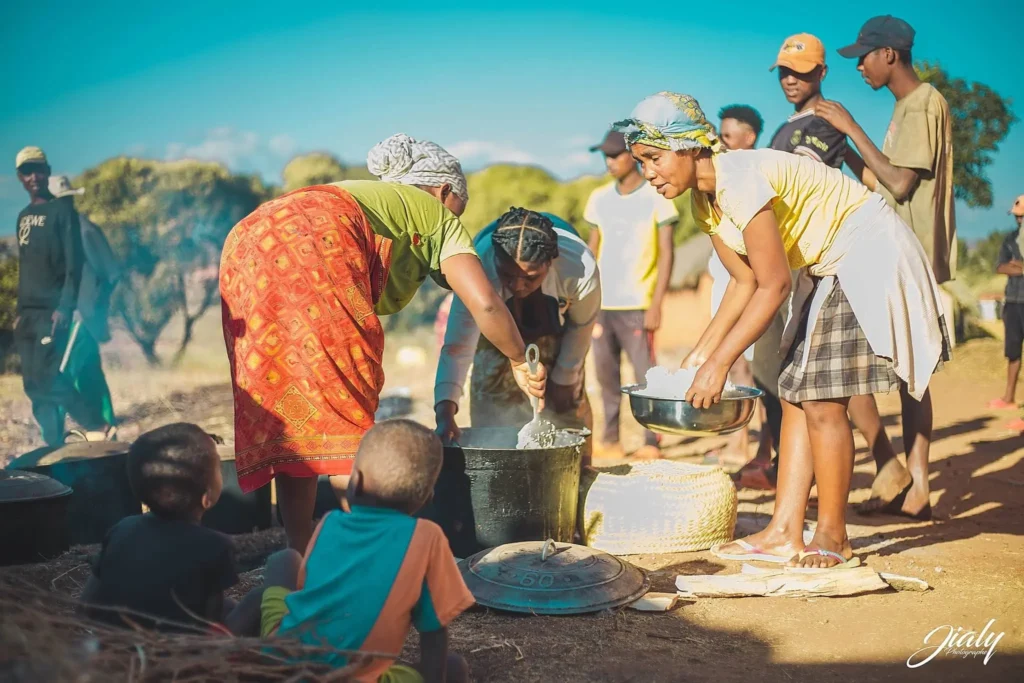
Yes, under certain conditions. It is a family ritual, but it may remain open to respectful visitors. The encounter usually takes place with the help of a local guide who knows an organising family and can facilitate a respectful introduction.
A few essential principles for experiencing this moment appropriately:
- Be accompanied by a guide who knows the family and the codes of the ritual — you should not simply show up at a Famadihana uninvited
- Observe before acting: follow the rhythm of the ceremony and do not take photographs without explicit permission
- Accept the festive atmosphere without judging it: singing, dancing and laughter are an integral part of the ritual; it is not a time of mourning
- Remain discreet in your behaviour, clothing and attitude, just as you would at any intimate religious or family ceremony
5. Why is the Famadihana ritual in Madagascar worth discovering?
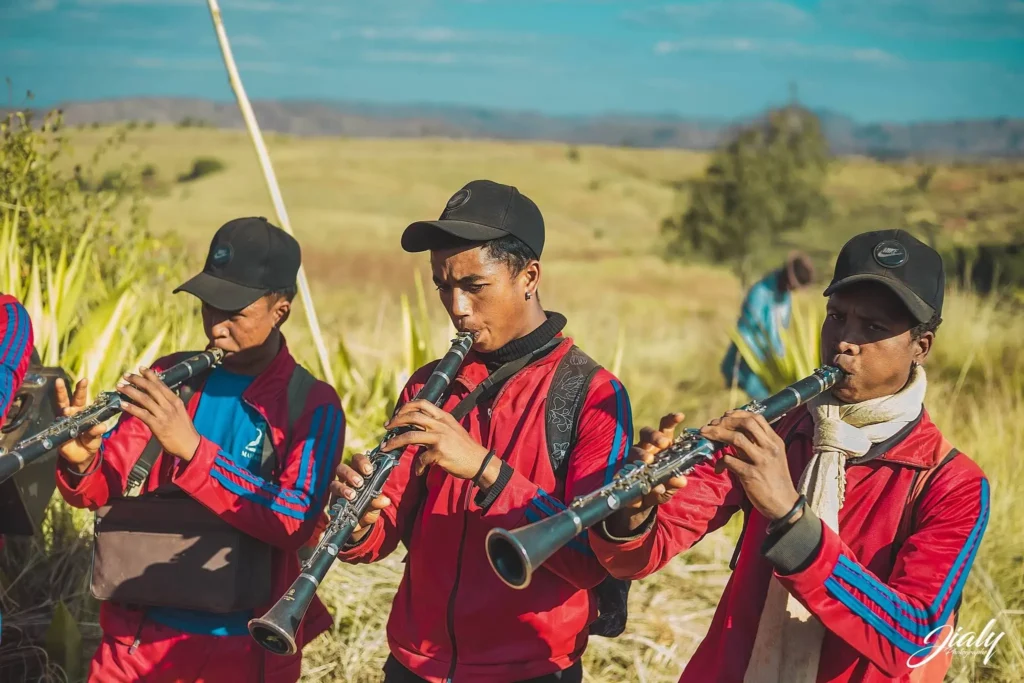
Famadihana in Madagascar is an exceptional anthropological tradition that celebrates life rather than death. For a traveller, witnessing it, even from a distance or for a brief moment, offers an understanding of Madagascar that few tourist experiences can match: that of a people who have transformed family remembrance into a celebration rather than a period of mourning.
It is worth noting that this practice is declining in some regions, particularly due to the cost of silk shrouds and changing religious beliefs. This is all the more reason to approach it as a privilege to observe, rather than as another tourist attraction.
Are you travelling to Madagascar between July and November? Depending on local opportunities and with the consent of the families concerned, our guides may be able to allow you to witness this unique moment while respecting local traditions.
Contact us to find out more.