

High season in Madagascar, from July to October, offers the best conditions for exploring the island. Skies are clearer, roads are more passable, and many regions can be visited without constraints.
But this period also attracts more travelers. Prices and availability are affected as a result. As the season approaches, choices become more limited — flights, accommodation, services. Rates, meanwhile, tend to rise.
Booking a trip to Madagascar several months in advance thus allows for a wider choice and, in many cases, more favorable rates. Planning ahead also makes it easier to organize your itinerary and secure the services you want, particularly in the most sought-after regions and establishments.
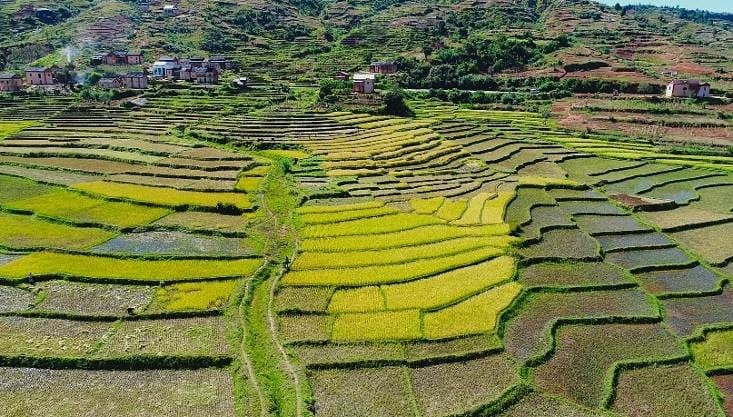
The impact of high season on your trip
Take whale watching in Sainte-Marie. It mainly takes place between July and September. Travelers who want it included in their itinerary all tend to depart during the same months, which means accommodations and activities in the area are in high demand.
The same is true for destinations that are hard to reach during the rainy season. The Tsingy of Bemaraha are a good example. Access becomes difficult during the wet season, and much of the tourist infrastructure closes.
If you’re set on seeing a specific site, choosing your dates isn’t enough — you also need to make sure the services you want will be available on those dates.
This is where planning ahead really matters. The more your trip depends on fixed dates, seasonal activities, or specific accommodations, the earlier you need to start organizing it. That’s the best way to build them into your circuit in Madagascar.
Beautiful places book up faster than you might think
n Madagascar, several highly sought-after accommodations are deliberately limited in capacity. This is the case for a number of lodges in Isalo, Andasibe, or certain seaside areas of Nosy Be.
When there are only a few dozen rooms available, demand for the same dates fills them up quickly. Some establishments are fully booked several weeks, or even several months, before departure.
The goal isn’t just to “find a hotel.” For a tailor-made trip, you need to find accommodation that fits each stage, your budget, your desired level of comfort, and the pace of your circuit in Madagascar.
Booking late can therefore change everything. Sometimes you have to switch establishments. Adjust a stage. Adapt the itinerary to whatever rooms are left.
By planning ahead, you keep your options open. The circuit is built around what you want, not around the rooms that happen to still be available.
Domestic flights fill up just as quickly during high season in Madagascar
On many itineraries, domestic flights are essential. They connect remote regions and save hours, sometimes even days, of driving.
During high season, seats disappear quickly. But having a seat isn’t enough — flight timing has a real impact on how the circuit is organized.
A dawn departure or a late-day arrival doesn’t offer the same possibilities for what comes next. A poorly timed flight means a long wait, a complicated transfer, or a shortened excursion.
Domestic flights therefore need to be planned alongside the rest of the itinerary. By booking early, you keep more options open and can aim for timings that fit best with your stages.
To make organizing your tailor-made trip easier, Aventour also offers a ticketing service for international and domestic flights.
Booking Early Also Helps You Better Manage Your Budget
Planning ahead doesn’t mean everything will be cheaper. Rates vary depending on the period, the establishment, the airline, and availability.
That said, booking several months in advance generally gives you more choice.
Once the first room categories or certain airfares are gone, you have to turn to something else. And that alternative may not match your budget or expectations as well.
Booking early therefore allows you to compare several options before confirming, and to better manage your overall budget.
What this means for you in practical terms
For a trip to Madagascar during high season, planning ahead gives you:
- More choice of accommodations and dates;
- More options for domestic flights, especially the best timings;
- More flexibility to build or adjust your itinerary;
- A better choice of activities and excursions;
- More room to stick to your budget;
- and, above all, more peace of mind before departure.
The goal isn’t to book as early as possible at all costs. It’s about giving yourself enough time to design the trip, check availability, and coordinate the services involved.
Why Plan Ahead With Your Travel Planner?
Working with a tour operator specializing in Madagascar gives you access to strong on-the-ground knowledge and expert support throughout the organization of your trip. That said, it doesn’t mean availability is guaranteed right up until the last moment.
Even for a professional experienced in organizing circuits in Madagascar, certain constraints remain the same: a fully booked hotel can’t add rooms on demand, a full domestic flight can’t create new seats, and a seasonal activity can’t be shifted to another time of year.
Booking before Madagascar’s high season gives the tour operator more room to work with: searching for the accommodations you want, checking the various transport options, adjusting the itinerary if needed, and building the trip around the client’s expectations.
Conversely, when a request comes in late during high season, there’s less to work with, and more compromise is needed based on what’s still available. An alternative can of course be found, but it won’t necessarily match the original choice in terms of accommodation, timing, or itinerary.
Planning ahead therefore allows you to make the most of a professional’s support: the earlier the bookings are made, the more room they have to build the trip you actually want, rather than simply finding what’s still available.
Our tips
For a trip to Madagascar during high season, plan ideally three months ahead to give yourself time to organize everything with peace of mind. This way, you keep a comfortable range of choices.
- Be extra attentive for a departure between July and September. This is the school holiday period, and also whale-watching season in Sainte-Marie.
- Allow even more lead time in certain cases: small-capacity establishments, highly sought-after accommodations, multi-region circuits involving domestic flights.
- The more constraints your trip has, the more worth it is to plan early. Fixed dates, specific accommodations, room category, domestic flights, particular activities — it all matters.
In short, booking early for a high-season stay in Madagascar isn’t just about securing a room or a plane ticket. It’s about giving yourself more possibilities to build a coherent itinerary, choose your accommodations, and organize each stage under good conditions.
During high season, a few months’ head start can change everything. You set off with a trip built around what you want, instead of an itinerary shaped only by whatever is still available.
Thinking of discovering Madagascar between July and October? Write to us now — let’s take the time to talk it through and build a trip that truly fits you.
High season mainly runs from July to October. Conditions are generally favorable in many regions, and it’s also a period of high tourist demand.

For a departure between July and October, it’s best to start several months ahead. This is even more true if your circuit includes small-capacity accommodations, domestic flights, or fixed dates.
Not necessarily — rates vary depending on the period, the establishment, the airline, and availability, so early booking doesn’t automatically mean lower prices. That said, booking ahead generally gives you more choice before certain room categories or airfares disappear, which in turn makes it easier to compare options and manage your overall budget.
Yes, in some cases. This is especially possible if your dates are flexible and several accommodation or itinerary options remain available.
The main difference lies in the choice available.
As high season progresses, certain services become fully booked. You may then need to change your dates, choose a different establishment, or adapt certain stages of the circuit.
A last-minute trip is therefore still possible, but you’ll have less flexibility to build exactly the trip you had in mind.