

Explore the 5 pillars of responsible tourism in Madagascar in 2026: regeneration, JOMO holidays, off-the-beaten-track travel, craft immersion and ethical commitment for a journey with a positive impact.
Towards more responsible and human-centred tourism: The future of tourism in Madagascar
Travel in 2026 is no longer measured by the kilometres travelled, but by the positive footprint left behind. At Aventour Madagascar, we closely follow evolving global expectations to offer experiences where meaning meets escapism. While regenerative tourism in Madagascar is now at the heart of our concerns, it is part of a broader movement transforming the tourism industry.
Madagascar, a true island-continent, is home to 80% endemic species and the world’s only population of lemurs. Faced with climate challenges, sustainability alone is no longer enough. The island now calls for profound regeneration.
Its wild landscapes and traditional craftsmanship make it the ideal sanctuary for the travel of tomorrow. For Aventour, responsible tourism in Madagascar is a deeply held belief embedded in our DNA. We transform every itinerary into a tangible driver of growth for local communities.
1. Regeneration: the evolution of responsible tourism in Madagascar
For Aventour Madagascar, sustainability is the foundation on which we are building the future of travel. Today, our commitment is fully focused on responsible tourism in Madagascar. Unlike traditional sustainable tourism, which aims to “do no harm”, regeneration seeks to actively revitalise social structures and communities. Why is Madagascar so well suited to this approach? Because the island’s balance depends on its people. The economic development of rural areas is the best safeguard for environmental protection: a community that prospers thanks to travellers is a community that can protect its land.

Aventour Madagascar addresses these needs by designing tours where every traveller becomes an agent of social change. At the heart of this approach, our tours include an authentic local immersion close to the local population. By sharing the daily life of the Malagasy people, travellers do not simply observe; they directly contribute to promoting local culture and supporting the subsistence economy. This vision, recognised as early as 2018 through Fair Trade Tourism certification, ensures that our actions are measurable: we explore without altering, share without distorting and promote without exploiting the island’s human capital.
2. JOMO holidays: the new luxury of responsible tourism in Madagascar
The luxury of tomorrow is silence. The “JOMO” (Joy Of Missing Out) trend, or the joy of disconnecting, has become a priority for travellers overwhelmed by hyper-connectivity. Madagascar perfectly meets this expectation thanks to its “secret places” and wild areas preserved from urban chaos. With a very low population density in certain regions and areas still untouched by extensive digital infrastructure, it is one of the few destinations in the world where vast landscapes allow for intentional isolation. Aventour responds to this demand by creating special off-the-beaten-track retreats. By prioritising exclusivity, we enable a spiritual reconnection with oneself, guided by the peaceful rhythm of Malagasy nature.

3. Off-the-beaten-track routes: the exclusivity of responsible tourism in Madagascar
Because protecting natural sites is a priority, exploring off-the-beaten-track routes has become essential to avoid overtourism. Madagascar, with its continental scale (587,000 km²), has thousands of hidden gems located just a few kilometres from overcrowded areas. This geographical diversity, ranging from the Tsingy de Bemaraha to the wild coastlines of Fort-Dauphin, makes it possible to multiply points of interest without ever overloading a single region. Aventour Madagascar addresses this challenge of managing visitor flows by systematically prioritising routes where others do not go. We use our long-standing local expertise to uncover authentic alternatives to standardised tours, thereby helping preserve the island’s natural beauty for the future.

4. Meaningful immersion: craftsmanship as one of the pillars of responsible tourism in Madagascar
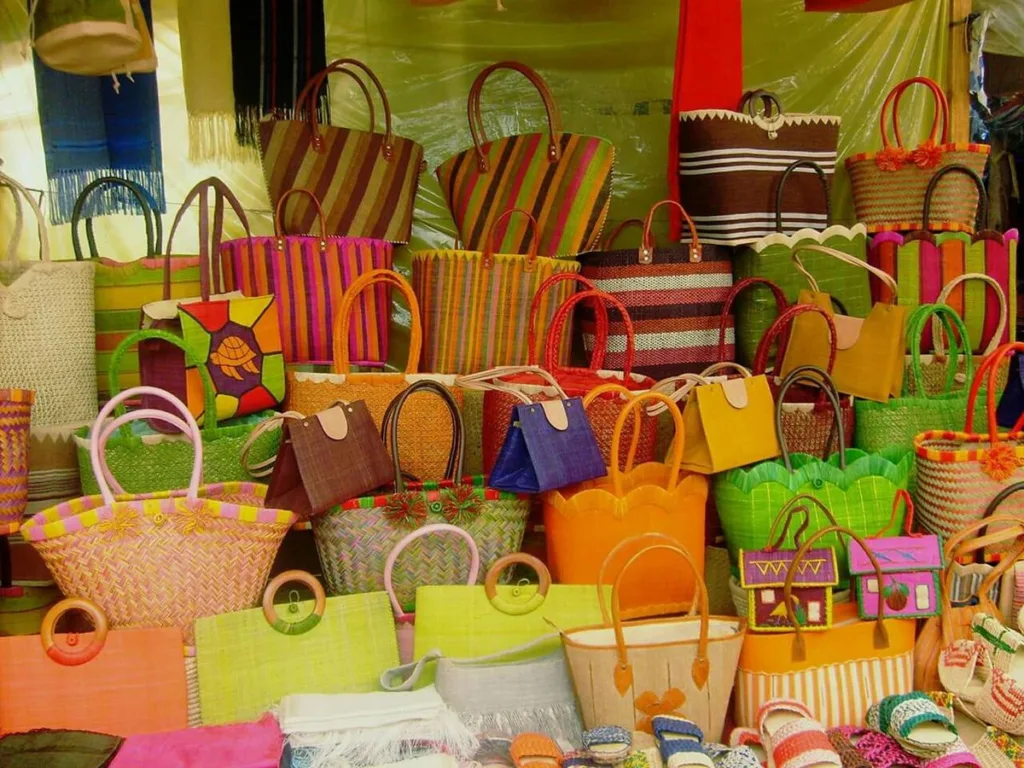
Cultural immersion is the true driving force behind our expeditions. In 2026, local crafts are no longer simply an impulse purchase, but a means of creating a genuine human connection and ensuring a fair transfer of wealth. Malagasy craftsmanship, including silk, horn, raffia and wood carving, is a pillar of local culture. By promoting short supply chains, Madagascar enables direct encounters between craftspeople and travellers. At Aventour Madagascar, we transform the act of purchasing into a meaningful cultural immersion. We ensure that your journey directly supports local craftspeople, enabling communities to earn a dignified living from their exceptional skills while protecting ancestral know-how, some of which has been recognised as UNESCO Intangible Cultural Heritage.

5. The traveller as a contributor: the ethics of responsible tourism in Madagascar
Finally, the trend is towards the traveller as a contributor. A tourist’s presence in a region becomes a tangible driver of economic and social growth. On an island where conservation and development challenges are immense, every action counts. Aventour Madagascar also meets these expectations by adhering to Travelife standards, committing to the continuous improvement of its practices. We support our clients through a traveller charter, raising awareness of responsible practices: respecting “fady” (local taboos), managing waste and supporting circular economies. Choosing responsible tourism in Madagascar with us means opting for recognised expertise and a measurable positive impact.
In conclusion, choosing to travel differently in 2026 means accepting the need to slow down in order to better understand. As we like to say at Aventour Madagascar: “We do not sell you a destination; we offer you a new perspective on the world.”